Laminate is simple to maintain… however sometimes deeper cleaning is necessary. Here’s what you need to know about special finishes various materials and your laminate countertop.
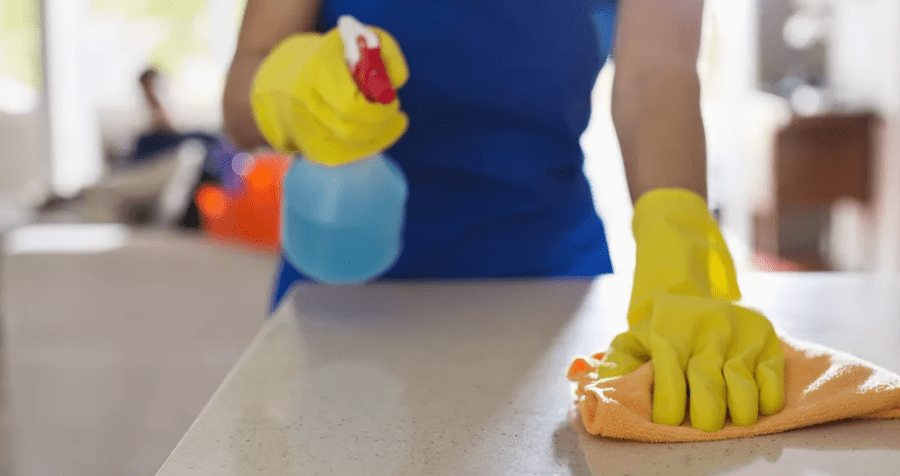
Ordinary Cleaning
In most cases, you only need to use a clean, damp, nonabrasive cotton cloth and a mild liquid detergent or household cleaner.
Rinse with clean water, using a clean, non-abrasive cloth.
Do not flood the laminate, especially near seams; water can penetrate seams and cause the substrate to swell.
Dry the surface with a soft, clean, non-abrasive cloth.
For specific types of surfaces use the following care guidelines:
Matte and Sparkle Finish Laminates
Especially hard-to-clean areas may require special attention. Use a nylon bristled hand or vegetable brush along with a mild liquid detergent-and-water solution or household cleaner. Clean the soiled area using a rotating motion. Rinse and dry the surface as indicated above.
Sculpture and Dimensional Finish Laminates
These surfaces may require special attention to clean the depressed areas. Use a nylon-bristled hand or vegetable brush along with a mild liquid detergent-and-water solution or household cleaner. Clean the soiled area using a rotating motion. Rinse and dry the surface as indicated above.
High Gloss Finish Laminates
If residual streaks and smears remain after normal cleaning use a mild glass cleaner and then dry with a clean non-abrasive cotton cloth. Avoid exterior glass cleaner.
Abrasives
Abrasive pads scouring powders or cleaners may permanently dull and scratch the laminate surface making it susceptible to staining. Ceramics including unglazed materials and other abrasive objects can cause scratching and premature wear – do not slide these items across surface.
Chemical Damage
Never use cleaners containing acid alkali or sodium hypochlorite. These cleaners will mar etch corrode and permanently discolor the laminate surface. Also make sure that bottles rags and other materials contaminated with these cleaners never contact the laminate surface. Accidental spills or splatters from these compounds should be wiped off immediately and the area rinsed thoroughly with water.
Examples of cleaners containing acid alkali or sodium hypochlorite include but are not limited to:
Ceramic cooktop cleaners
Oven cleaners
Chlorine bleach
Rust removers
Coffeepot cleaners
Some countertop cleaners
Drain cleaners
Some disinfectants
Lime scale removers
Toilet bowl cleaners
- guidelines attributed to the experts at Formica
 Barry H Klein Countertop Installation